Introduction
A urologist can hold a clean license, a full malpractice tail, and a signed offer letter and still generate zero in-network revenue on day one. The gap is paperwork, not clinical readiness: credentialing, contracting, payer enrollment, and paneling, each running on a different clock.
Many practices struggle because they treat these as one step instead of four. A credentialing approval doesn't mean a payer has activated the provider. A signed contract doesn't guarantee claims will pay.
This article is for independent urology practices adding a physician, advanced practice provider, or location. It separates the four processes, maps the workflow end to end, flags the contract terms worth reviewing before signature, and outlines where delays typically originate.
Requirements and timelines vary by payer, state, and provider type, so confirm specifics directly with each payer and relevant regulator.
Key Takeaways
- Credentialing confirms qualifications; contracting sets payment terms; enrollment and paneling activate billing
- An approved credentialing file or executed contract doesn't guarantee active in-network status
- Track provider, group, location, payer, contract, and effective date as separate statuses
- Clean CAQH data, clear internal ownership, and early payer follow-up reduce avoidable delays
- Some payers backdate to application receipt; others don't, risking a full month of lost revenue
What Credentialing, Enrollment, Contracting, and Paneling Mean
These four terms get used interchangeably in practice conversations, but each describes a distinct payer process with its own paperwork and timeline.
Credentialing is the payer's verification of a provider's qualifications: licensure, education and training, board certification where applicable, work history, malpractice coverage, and any sanctions or exclusions. It confirms the provider meets participation standards. It does not set a fee schedule, create a payment agreement, or make the provider eligible to bill in-network. Those come later.
Enrollment (sometimes called participation) is the administrative process of linking an already-credentialed provider to the correct group, tax ID, NPI, practice locations, and specific payer products.
Contracting is the legal agreement governing participation: reimbursement methodology, covered services, billing obligations, authorization rules, audit rights, and termination terms.
Paneling, or payer activation, is the final step where the payer loads the provider into its claims and directory systems and confirms a specific effective date.
The Status Sequence That Actually Matters
Think of it as four gates, not one:
- Credentialed: qualifications verified
- Contracted: payment terms agreed and signed
- Enrolled/linked: provider tied to the correct group, TIN, and location
- Paneled/active: payer confirms a written effective date
Don't bill in-network until you have written confirmation of step four.
Individual vs. Group Records
Payers maintain separate records for the individual provider (Type 1 NPI) and the organization (Type 2 NPI). An incorporated physician typically needs both: one identifying the person, one identifying the practice entity.
According to CMS's NPI guidance, obtaining an NPI does not by itself enroll a provider in any health plan or guarantee payment. Verify specific NPI, CAQH, and payer requirements directly with NPPES, CAQH, and each payer.

How Urology Practices Should Coordinate the Workflow
Credentialing and payer enrollment, not office build-out, usually determine when a new urologist generates their first collectable claim. That means this work needs to start well before a lease is signed or a start date is set.
A practical workflow runs in sequence:
- Define the provider's start date, services, and target payers
- Confirm group, tax ID, and location details are current
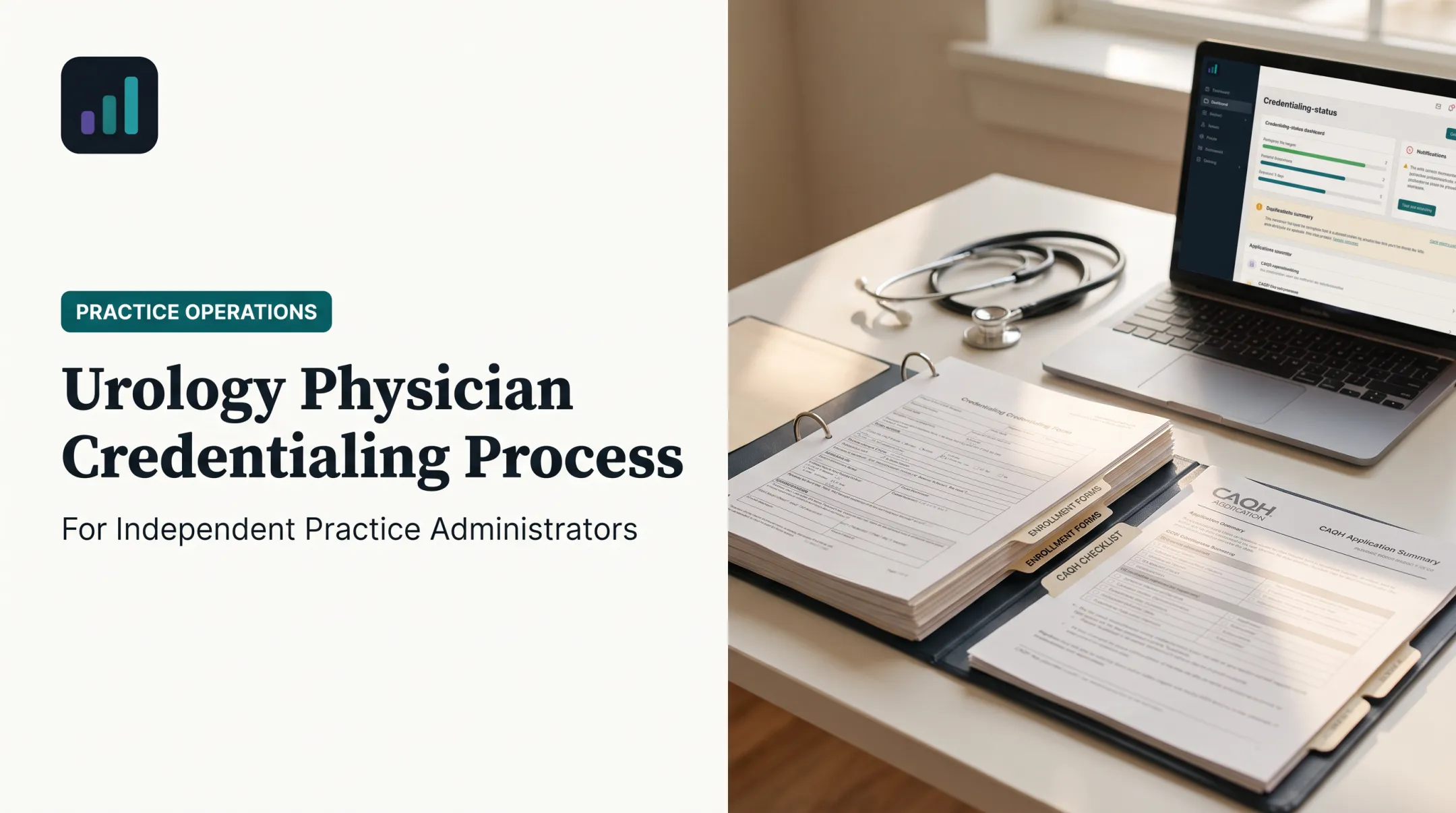
- Gather documentation and build the CAQH profile
- Submit payer-specific applications
- Monitor and follow up on every open file
- Review the contract before signing
- Verify active status in writing before scheduling in-network patients
Documentation to Prepare
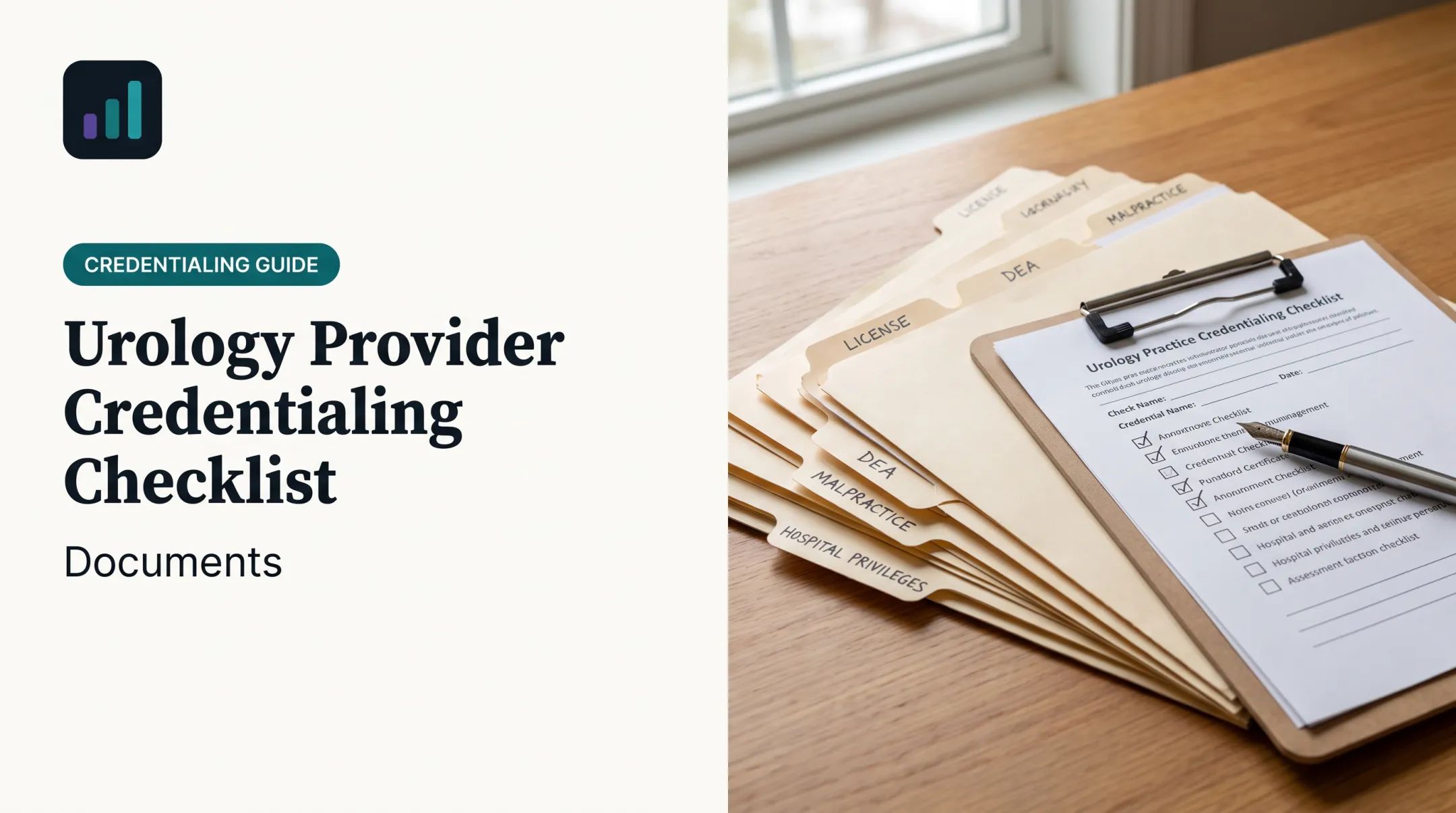
Universal documents most payers request include:
- Current state licenses
- DEA registration where applicable
- Board certification and training records
- Malpractice coverage history
- Work history and professional references
- Tax identification and NPI data
- Ownership details and location information
Payer-specific forms, rosters, or letterhead requests layer on top of this baseline, so confirm each payer's exact packet before submitting.
Build a Tracker, Assign Owners
A single tracker should log:
- Application date and missing items
- Payer contacts and credentialing status
- Contract status and linked locations
- Effective date and directory listing
- Recredentialing date and next follow-up
Treat each payer as its own project with its own deadline.
Accountability should be explicit:
- Provider validates personal history and credentials
- Administrator coordinates applications and follow-up
- Authorized signatory executes contracts
- Billing team confirms payer setup before claims go out
Adding a physician, opening a location, or expanding into hospital or ASC privileges each triggers new payer linkages, not just updates to an existing file.
Before go-live, confirm the effective date, payer product participation, location linkage, directory listing, and claims-routing instructions directly with the payer. GrowUrology's free business guides can help a practice think through the financial effects of delayed activation alongside payer and regulatory guidance, though they aren't a substitute for credentialing or legal services.
What to Review Before Signing a Payer Contract
Rate alone tells you little. Compare the proposed agreement against your actual urology service mix, payer volume, referral patterns, and growth plans before deciding whether it's worth signing.
Payment Terms
Confirm how the payer calculates reimbursement and how those rules apply to your urology mix:
- Reimbursement methodology (fee schedule, percentage of Medicare, or other formula)
- Multiple-procedure and site-of-service rules
- Modifier handling and bundled services
- Professional versus facility billing treatment
- How rate updates or policy amendments get communicated
Commercial contracts don't automatically mirror Medicare's structure, so confirm rates by setting rather than assuming parity.
Operational Obligations
Check these items against your current workflow:
- Prior authorization and referral requirements
- Timely filing deadlines and appeal windows
- Overpayment recovery and audit procedures
- Medical-record request turnaround and documentation standards
- Coding and claims-submission policies
AMA's contract checklist specifically recommends confirming whether services and payment are permitted while a credentialing application is still pending. Many practices assume this rather than verify it.
Contract Mechanics
Read these provisions carefully before you sign:
- Term length and automatic renewal
- Termination rights and notice periods
- Assignment clauses and dispute resolution
- Whether downstream payer products or affiliates are automatically included
Evergreen contracts with auto-renewal often require notice months in advance to exit cleanly.
Credentialing staff shouldn't accept financial or legal terms outside their authority. Send the agreement to the practice's authorized decision-maker and, where appropriate, qualified legal counsel.
Once terms are negotiated, document them and link them to the billing system, fee schedule, provider roster, and effective date so revenue-cycle staff can apply the agreement correctly from day one.

Common Delays, Costs, and Risk Controls
Most credentialing delays trace back to a handful of repeat offenders:
- Incomplete applications or inconsistent names and addresses
- Expired licenses or lapsed malpractice coverage
- Unexplained work-history gaps
- Stale or unattested CAQH data
- Incorrect NPI or tax identification
- Payer backlogs and missed follow-up windows
MGMA's 2021 practice poll found 54% of practices reported rising credentialing-related denials, with some payers reportedly taking up to 100 days to issue an effective date and not permitting retroactive claims afterward. A delayed effective date means postponed in-network scheduling, out-of-network claim processing, and denial rework. The new provider is fully on payroll from day one while productivity is still ramping.

What Delays Actually Cost
Expect costs across several categories rather than one number:
- Internal staff time tracking applications and chasing documents
- CAQH and credentialing software
- Consultant or outsourced-service fees (historical estimates roughly $250–$600 per provider one-time, plus monthly; confirm current market rates)
- Legal review of contract terms
- Opportunity cost of delayed in-network participation
Risk Controls Worth Building Now
- Start credentialing before the hire date, not after
- Maintain a license and malpractice expiration calendar
- Keep one source of truth for provider data across CAQH and payer portals
- Schedule recurring follow-ups rather than waiting for payers to respond
- Separate contract approval from credentialing work so no one signs outside their authority
- Get activation confirmed in writing before billing in-network
Submitting an application, getting credentials approved, or signing a contract doesn't mean you can bill in-network. Follow each payer's written confirmation of participation and effective date before treating a claim as in-network.
Frequently Asked Questions
Is contracting and credentialing the same thing?
No. Credentialing verifies a provider's qualifications; contracting establishes network participation and payment terms. A practice typically needs both completed, plus enrollment and paneling, before billing in-network.
How much do credentialing services cost?
Costs vary by payer count, provider complexity, number of locations, and whether the work is handled internally or outsourced. Compare the scope of services and included follow-up rather than looking for one universal price.
How long does urology provider credentialing and contracting take?
Timelines depend on the payer, application completeness, provider type, and current network status. Confirm current estimates directly with each payer rather than relying on a general industry average.
Can a provider see patients before credentialing and contracting are complete?
Clinical scheduling and in-network billing are separate decisions. Verify licensing, payer participation, and effective dates before billing any visit as in-network to avoid denials or patient balance-billing issues.
What documents are needed for provider credentialing?
Common categories include state licenses, board certification, malpractice coverage history, work history, NPI data, tax and group information, and payer-specific forms. Exact requirements differ by payer and state.
What is the role of CAQH in credentialing?
CAQH centralizes provider information for many participating payers through a single profile. It must stay complete, current, and attested, and some payers still require additional payer-specific submissions.